

Collecting guide
Collecting Name Badges: A Beginner’s Guide to History and Care
Build a collection with a clear focus, reliable records and thoughtful care—without confusing a good story with verified history.
Updated November 12, 2026 · 5-minute read
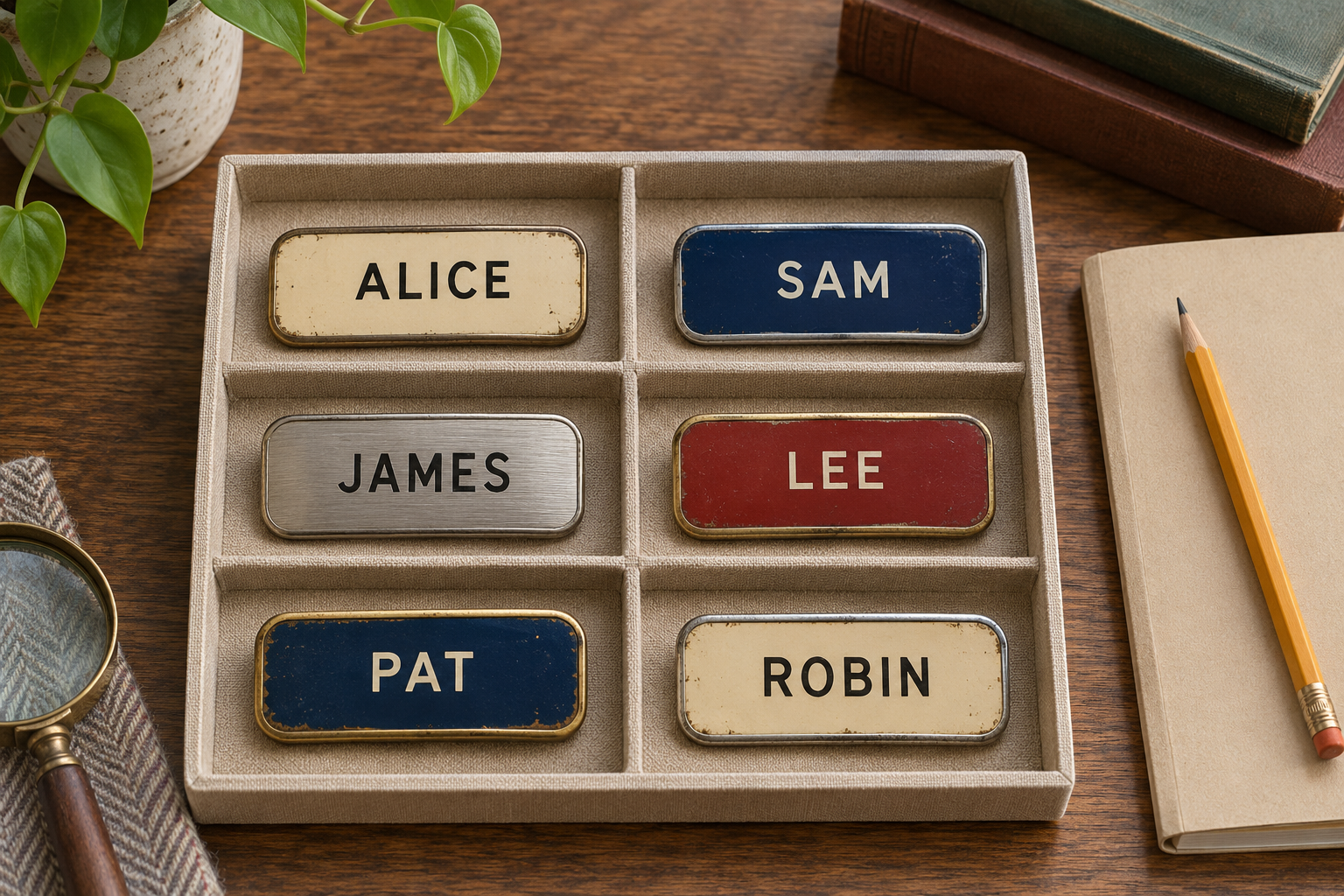
Choose a manageable collecting theme
Start with a focus that interests you: a particular workplace, a local organization, events you attended, a style of lettering or a family’s working history. A clear theme makes it easier to decide which pieces belong in your collection and what you want to learn about them.
Set a budget and leave room for suitable storage and documentation. A small, well-recorded group can be more satisfying than a large assortment with no context. Treat collecting as an interest, not a promise that an item will become valuable.
Record where each badge came from
Assign a simple inventory number in your records and photograph the front and back. Note the wording, dimensions, visible materials, attachment type and condition. Record when and where you acquired it, along with any accompanying documents or seller statements.
Separate confirmed facts from an attribution. “Given to me by the former wearer” is different from “seller believes it dates to the 1970s.” Keep receipts or correspondence that support the history, and update the record when better evidence appears. Do not turn an attractive story into a fact just because it is repeated online.
Look carefully before buying
Ask for clear photographs of the front, back, edges and attachment. Check whether repairs, replacement parts or reproduction status are disclosed. Compare the object with reliable examples or period records when available, while recognizing that a similar design does not prove the same age or origin.
A listing price is not evidence of what an item actually sells for. If price matters to your decision, compare relevant completed sales and their condition and documentation. For a significant purchase, seek an appropriately qualified opinion rather than relying on a generic online estimate.
Acquire badges only through legitimate transfers. Do not use collected workplace or event credentials to imply current employment, authorization or access. When sharing photographs, consider whether a badge exposes a living person’s private information or an active credential.
Avoid cleaning away the evidence
Older badges may combine metal, paint, plastic, adhesive and paper, each with different vulnerabilities. The National Archives’ artifact-care guidance cautions against cleaning, polishing or repairing historic objects without conservation advice. Keep a worn finish or fragile attachment as found until you understand its condition.
Do not use household polish, solvents or glue to make an uncertain piece look new. A current badge’s care instructions are not automatically suitable for an older collectible. Ask an objects conservator about valuable, fragile or deteriorating pieces.
Store and display with the materials in mind
Give each badge enough space and support so pieces do not rub against one another or strain their fasteners. Label the enclosure or your catalog record rather than marking the object. Avoid overcrowding or forcing a piece into a display mount.
The Canadian Conservation Institute’s guidance on older plastics explains that materials can deteriorate differently and that light, heat and humidity can contribute to damage. There is no single storage recipe for every mixed-material badge. Seek material-specific advice when the composition is uncertain.
Check the collection periodically for changes and document concerns with photographs. If a surface becomes sticky, powdery, cracked or loose, avoid unnecessary handling and get advice before changing the storage or attempting treatment.
Enjoy design history without confusing old and new
Compare how different layouts prioritize a name, logo or role. Our classic name tag design guide offers a useful modern comparison, and the engraved badge guide explains current design and ordering considerations.
If you create a new commemorative badge for your own group or event, document it as a contemporary piece. Review metal name tag options or engraved plastic formats for that new project, while keeping it clearly distinct from an original historical item.
Name badge collecting questions
Are old name badges valuable?
There is no universal value. Condition, documented history and buyer interest can vary. Compare relevant completed sales and seek a qualified opinion for a significant purchase; age alone does not establish rarity or value.
How can I tell whether a badge is original?
Look for supporting documentation, clear construction details and reliable period comparisons. Ask the seller what is known and what is uncertain. A logo or aged appearance by itself does not establish authenticity.
Should I polish a metal badge?
Do not polish an older collectible simply to improve its appearance. Surface finishes and wear may be part of its history, and treatment can cause damage. Seek conservation advice first.
What should I put in my collection record?
Include photographs, wording, dimensions, visible materials, attachment, condition, acquisition details and supporting documents. Clearly label uncertain dates or stories as unverified.
Can I wear or display a former employee badge?
Display it with accurate context and respect privacy. Do not use it to imply current affiliation or gain access. Consider a photograph or clearly identified reproduction if wearing the original could damage it or cause confusion.